
Starting a Monroe Residents Directory Search
Monroe is the Union County seat, but its usable resident trails are not kept in one Monroe residents directory. The Tax Assessor and GIS are the practical starting point when an exact address is known. The Register of Deeds follows recorded property parties by name, while the North Carolina voter tool checks a particular registration. The Clerk and eCourts handle court files, and the library, archives, and Carolinas Genealogical Society provide the older layer. Each source has a different time frame and a different meaning.
Begin with the clue already in hand. A parcel can lead to a property owner; an instrument can lead to an earlier transfer; a dated directory can place a historical entry at an address. None of those alone establishes continuous presence, and official sources do not ordinarily supply a complete live household list.
- Preserve the name or address exactly as it appears, along with the date and source of the clue.
- Search the Union County property inquiry or Atlas for the parcel, address, or owner connection.
- Use the resulting party name in the Register of Deeds grantor and grantee index when a recorded instrument is relevant.
- Check the voter tool, eCourts, city archive, or state record only for the separate question each one can answer.
- For a historic question, record the directory year and page, then corroborate with a map, newspaper, archive, or custodian record.
The Monroe Residents Directory Records Desk
A Monroe directory works best as a map to custodians. Union County keeps land, tax, court, mapping, and election material in separate systems. Monroe maintains municipal records apart from county files. State agencies maintain election, court, and business routes. For older family or address questions, the Dickerson Room, DigitalNC, the State Archives, and the Carolinas Genealogical Society add sources that were never designed as a modern resident roll.
Union County Register of Deeds
500 North Main Street, Suite 239
Monroe, NC 28112
704-283-3843
Union County Tax Assessor
500 North Main Street, Suite 236
Monroe, NC 28111
704-283-3746
Union County Board of Elections
PO Box 1106
Monroe, NC 28111
704-283-3809
For a court matter, the Union County Clerk of Superior Court at the Judicial Center, 400 North Main Street, controls the complete public file and certified copies. City papers, records, and minutes have a separate municipal custodian through the Monroe City Clerk.
Monroe Directory Address Clues in the Tax Roll
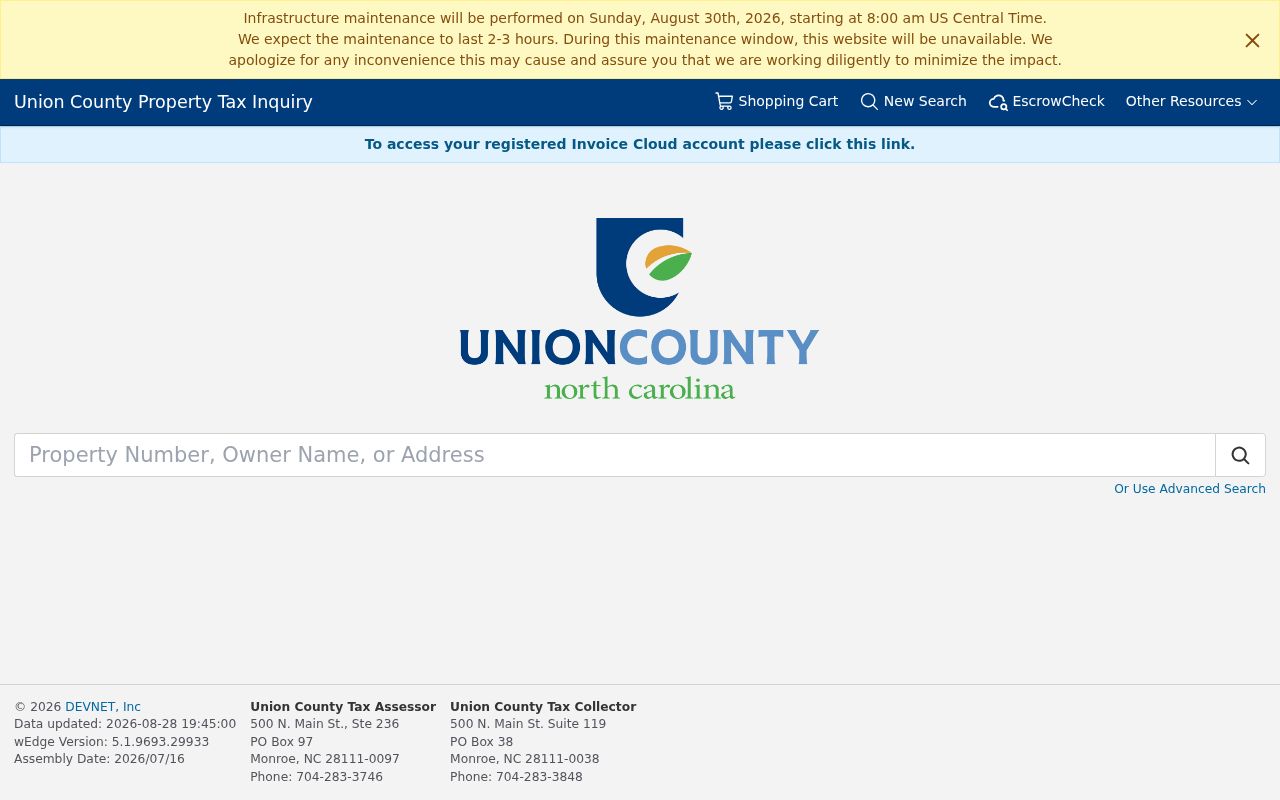
The Union County Property Tax Inquiry is the address-to-parcel bridge for Monroe directory research. Its quick search accepts one string for a Property Number, Owner Name, or Address. Results can present a property number, name, result address, type, and payment status. A detail record distinguishes physical and mailing address and can display legal, assessment, market-value, tax-due, ownership, and print controls. Those are record fields, not a declaration that a person occupies the parcel.
The following controls were confirmed in the official portal during the research pass. Use a precise query first, then preserve the result date because tax and address records change.
| Property Inquiry field | How it works |
|---|---|
| Property Number, Owner Name, or Address | Required quick-search text. One entry can be a parcel key, owner name, or address. |
| Year | Optional result-page selector. The inspected parcel displayed tax years from 2017 through 2026. |
| Sort By | Optional result ordering by year, number, name, or address, with a descending control. |
| Type, Number, Name, Address | Result fields that can identify the property category, key, owner or entity, and listed address. |
| Payment Status | Result status may show Payable, Paid, or Not Billed, with a payment-view control. |
Source view: the official Union County Property Tax Inquiry shows the search surface used for Monroe address research.
Follow the parcel number or owner name only to the next relevant custodian. The research example for the Government Center also showed that a legal description and display address can differ, which is a reason to save both rather than silently treating them as the same field.
Monroe Directory Map Results Need a Date
Union Atlas is the spatial companion to the tax roll. The public Union County Atlas offers Owner Name, Parcel Number, Address, and Subdivision Name searches, plus street-address and street-name modes. Its layers include parcels, roads, structures, address points, ZIP codes, precincts, schools, zoning, flood information, libraries, and aerial imagery. Select and Identify tools let a researcher understand the map context before moving to a dated record.
That distinction matters when a parcel shape, city boundary, or mailing clue seems to conflict with a newer source. GIS can place an address within a Monroe landscape, but it does not prove residence. The County also notes that municipal zoning must be checked with Monroe for an address within city jurisdiction.
Why a Monroe Voter Lookup Is Not a Resident Roster
The North Carolina State Board of Elections Voter Lookup is a current election-administration tool, not a Monroe household directory. Its visible form requires first and last name, permits an optional middle initial and year-of-birth selector, offers a county selector, and requires at least one status choice: Registered or Removed or Denied. A result can show registration status, jurisdictions, polling place, sample-ballot availability, absentee information, and voter history.
Use the Union County filter and a name only when the civic question warrants it. A result does not show ballot choices, does not confirm everyone at an address, and can exclude unregistered people. Full date of birth, Social Security numbers, driver-license information, and protected addresses do not belong in Monroe directory content.
Current Monroe Directory Sources
Current directory-like sources each describe a narrower relationship. The practical question is not which list is complete, but which custodian keeps the record that matches the question. The Monroe directory below separates the public index from the role it can reasonably support.
| Monroe source | What it can show | Custodian | Access route |
|---|---|---|---|
| Property Tax Inquiry | Parcel, owner or entity, physical and mailing address, tax fields | Union County Tax Assessor | Free public search; dated result |
| Union Atlas | Parcel geometry, address points, map layers, aerial and jurisdiction context | Union County GIS | Free map viewer; not a legal survey |
| Recorded-land index | Grantor, grantee, deed or plat lead, legal-description trail | Union County Register of Deeds | Online deeds from 1973; office route for deeper records |
| Voter Lookup | Registration and civic-jurisdiction information for a searched voter | N.C. State Board of Elections | Name and county search; protected-field limits |
| City archive and staff directory | Municipal documents, meetings, department contacts | City of Monroe | Public search and contact routing, not a resident roll |
A property record is the useful starting point for an address question, while a name with a specific civic or court context may take another route. The Monroe resident lookup guide explains how to corroborate one historical or public-record lead without combining unrelated same-name results.
eCourts Adds a Monroe Directory Court Route
The North Carolina eCourts Portal provides anonymous public search for public cases. Smart Search uses a record number or a name pattern with last name, first name, middle name, and suffix. Advanced filters include general or location filters, party name, year-of-birth information where available, case type, status, and filing date. Hearing and judgment modes answer more focused court questions.
A portal result may contain case information, parties, causes, events, dispositions, hearings, financial sections, and image links. It is not the official court record, and sealed, confidential, juvenile, adoption, or expunged matters can be absent or limited. For complete public files or certified copies, use the Clerk of Superior Court or the courthouse public-access kiosk introduced for Union County in 2025.
Note: Treat a court search as a case-specific route, not a general resident index, and retain the case date, court location, and public-access limitation with any result.
Monroe Directory Deed Trails Begin with a Name
The Register of Deeds land index is name-based rather than address-based. For a Monroe address trail, first use the assessor or Atlas to identify a parcel and current owner or entity. Then search that party as a grantee in the recorded-land index, capture the instrument date, book and page or document number, legal description, and prior reference, and repeat backward with the earlier party where the legal description matches.
The Register of Deeds says online deeds begin in 1973 and maps reach to 1842. Its land page states that mortgage information is not online, and county guidance routes questions about judgments and mechanics liens to the Clerk. The office is the deeper path for older records, restricted material, and records that the remote system does not expose.
- Parcel
- A tax and mapping unit tied to land, not a statement about all people connected to it.
- Grantor and grantee index
- A recorded-instrument index organized around the transferring and receiving parties.
- Criss-cross directory
- A historical address-oriented directory section that can help read an earlier street, not a current household register.
Monroe Directory City and County Records
City records add a municipal layer that county systems do not replace. The City archive supports keyword, archive, time-period, and date-range searching for published municipal files. Agenda Center adds terms, category, and date controls for public meetings. Monroe CityView is the municipal permit route, while the County Evolve portal applies to county building-code work and its zoning coverage excludes Monroe.
These materials can supply dated context for a street, public project, cemetery, or city decision. They should not be read as an individual-residence database. The City Clerk is responsible for city papers, records, and minutes, while the city staff directory is a public department contact tool. Monroe cemetery maps identify Hillcrest and Suncrest sections, but research found no complete official online interment-name lookup.
Lawful Boundaries for a Monroe Directory
North Carolina’s public-record framework begins with Chapter 132. G.S. 132-1 defines public records broadly, and G.S. 132-6 addresses inspection and copies, but neither statute turns every record field into material for a published resident profile. A custodian can have record-specific rules, costs, exemptions, and a limit against creating a new compilation. A missing online hit is not proof that no record exists.
The North Carolina Address Confidentiality Program provides qualifying survivors and household members a substitute address and mail forwarding. Sealed cases, juvenile and adoption protections, expunged matters, Social Security number limits, and similar exceptions remain in force. Public availability and ethical publication are separate decisions.
Historical Monroe Directory Shelves
Monroe’s historical directory record is unusually useful because it has dated, repository-backed runs rather than an undated transcription. DigitalNC and UNC holdings include full Monroe city directories for 1922-23, 1942-43, 1951-52, 1955-56, 1958-59, 1960-61, and 1962-63. The 1922-23 volume includes alphabetical names, classified businesses, a street directory, and miscellaneous information. Later volumes create useful comparison points but have gaps between years.
The Dickerson Genealogy and Local History Room at the Union County Public Library brings together directories, newspapers, census material, local-history files, Sanborn maps, and some on-site databases. The Carolinas Genealogical Society in the Old Historic Courthouse adds church, cemetery, war-file, school-annual, will, marriage, Bible-page, homestead-exemption, and local-newspaper indexes. For a directory entry, preserve the exact printed string, year, page, street spelling, initials, and any notation before drawing a conclusion.
The full Monroe city directories collection guide follows the printed volumes and their historical notation in more detail. A directory line is a time-stamped clue, best compared with a map, newspaper, instrument, cemetery index, or archive record.
Monroe Directory State Record Leads
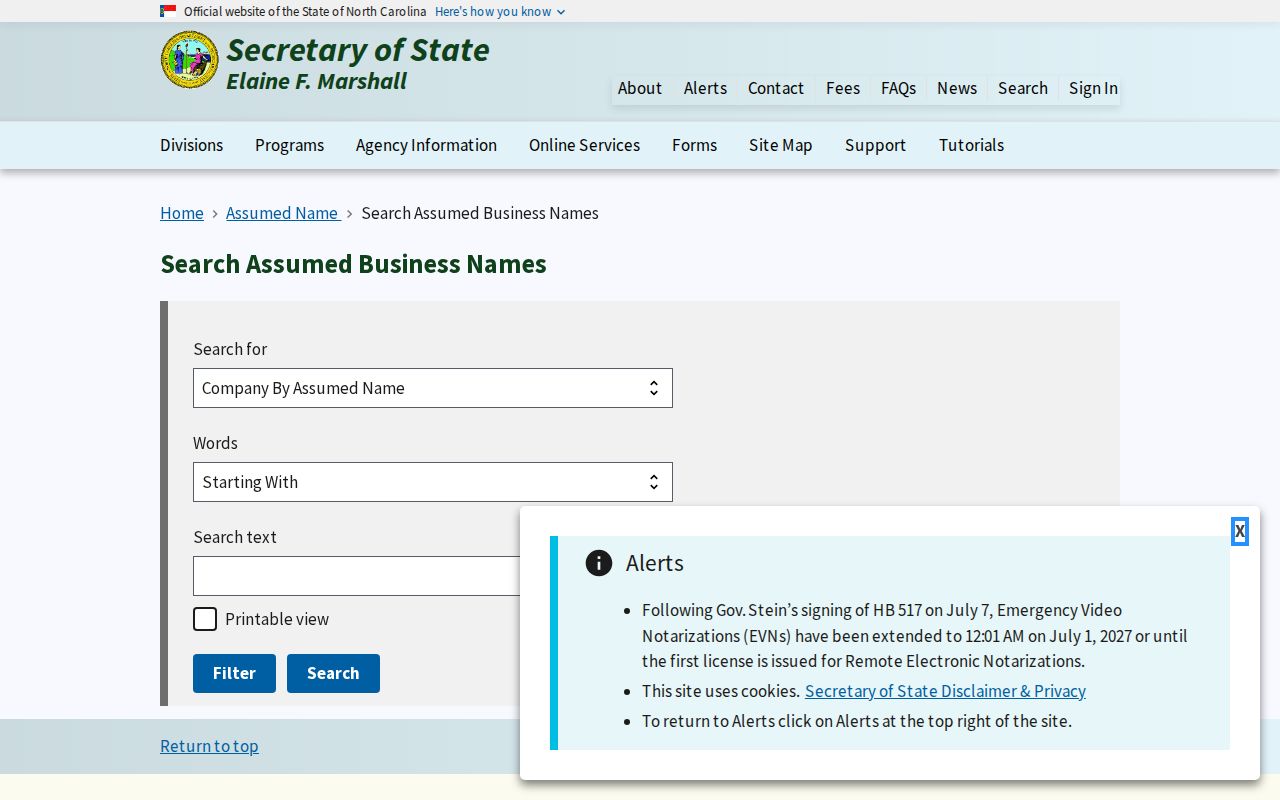
Some Monroe questions begin with a filing or claim rather than a local roll. The North Carolina Secretary of State’s assumed-name search accepts a search-for setting, entity type, word option, search text, name fields, start and end dates, and county filters including Union. The state database covers assumed-name filings on or after December 1, 2017; older filings may be held by the Register of Deeds. A filing can explain an organization or historic address connection, but it does not prove a person’s residence or current activity.
Source view: the official North Carolina assumed-name search is a human-use portal for targeted filing research.
North Carolina Cash is another limited state lead: its free name or business-name search can surface an unclaimed-property claim pathway tied to a current or prior address association. The Treasurer’s database is updated daily, yet a potential claim still requires proof through the official process and is not resident evidence by itself.
Public-Safety Results Are Not a Monroe Directory
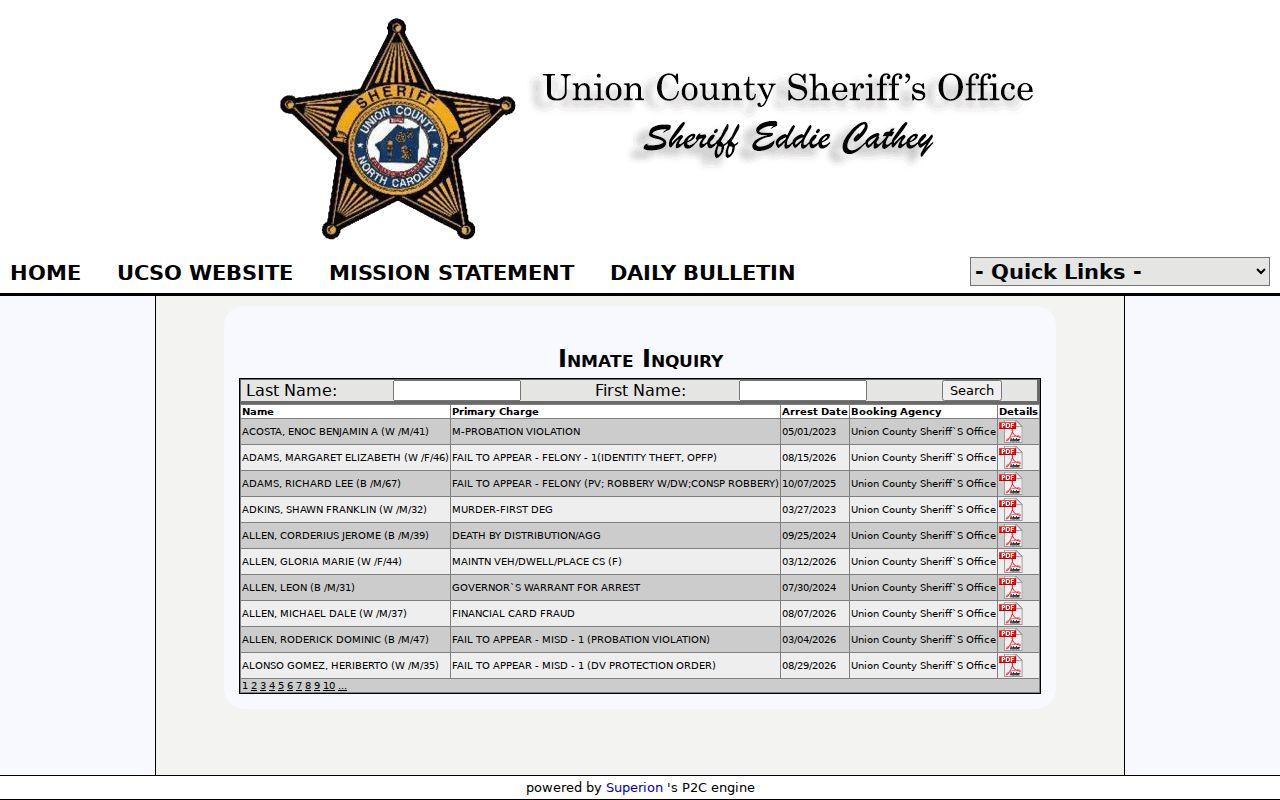
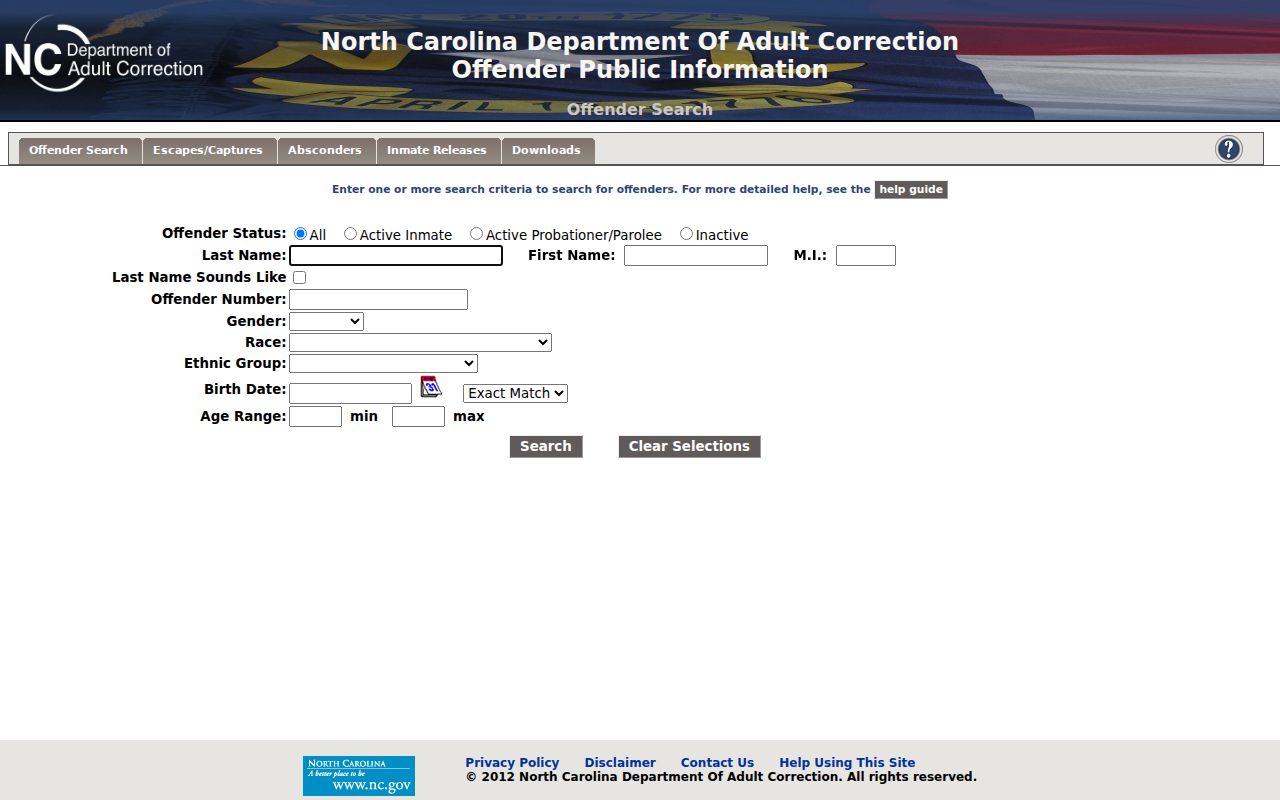
Public-safety databases have separate scope and should never be folded into a general Monroe directory. The Union County Sheriff inmate inquiry is a current county-detention route. The North Carolina Department of Adult Correction locator covers current and historical state-offender information back to 1972, searchable by name or offender ID. The state registry covers only people required to register and is not a complete criminal-history search. A record or no-result in one system does not establish a person’s full history.
Source view: the official Union County inmate inquiry is limited to its county-detention context.
The Sheriff route is distinct from state custody, court files, and Monroe Police report requests. The City’s Records Division supplies public accident, incident, and arrest-report copies through online, in-person, or email channels, using a report number, involved name, or incident location and date to locate a report.
Source view: the North Carolina Adult Correction locator uses name or offender-ID search for the state system.
State-offender coverage and a county detention snapshot are different record sets. Exercise particular care with identity, date, jurisdiction, and any protected or expunged matter instead of inferring a conclusion from a similar name.
Source view: the North Carolina Sex Offender Registry offers address, name, city, ZIP, map, and alert functions only within its registered-person scope.
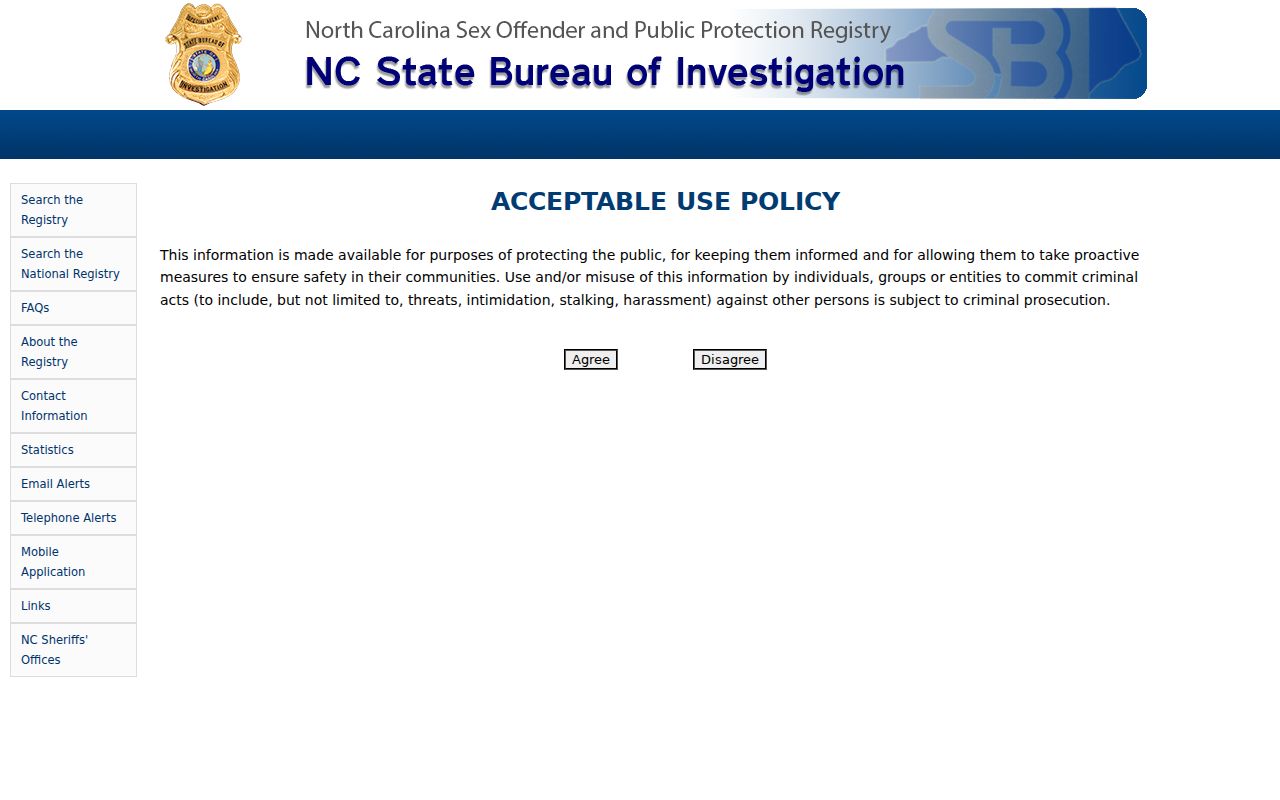
Registry information changes and applies only to the statutory registry population. Do not treat it as a neighborhood label, a comprehensive criminal search, or a substitute for an official case file.
Monroe Directory Updates and Source Confidence
Monroe record work improves when the source type is stated plainly: an official custodian record, an official index lead, a historical scan, a finding aid, a society index, or a staff-assisted search. That label helps prevent a historical directory page from being mistaken for a present claim, or a portal screen from being mistaken for a certified document.
Three local changes are worth rechecking before any time-sensitive research: Union County’s August 15, 2025 deed-notification notice, the Union courthouse eCourts kiosk released in June 2025, and the library’s May 2026 genealogy outreach. If a page fails to render, log the URL, date, search fields, and error state, then use the custodian or archive route rather than treating a technical failure as an absent record.
For a property-alert concern, preserve the message, compare the recorded date and instrument identifiers, contact the Register of Deeds, and seek appropriate professional or law-enforcement help when fraud is suspected. That focused workflow respects both the usefulness and the limits of the Monroe directory.